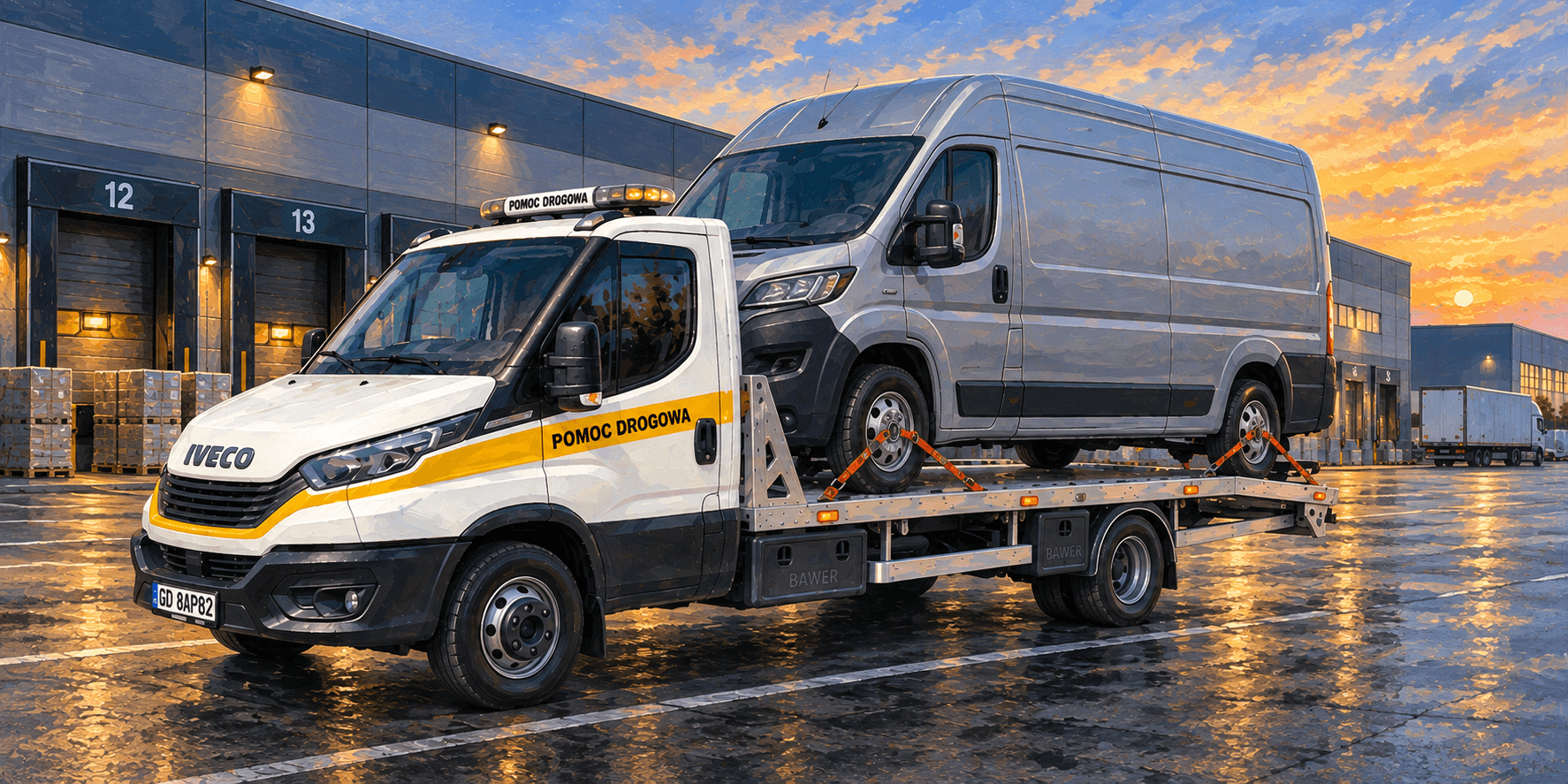
Van transport after a breakdown, collision or purchase
A stranded van can bring a business to a standstill
A commercial vehicle breakdown may interrupt a job, stop a delivery or leave an entire team unable to work. In this situation, it is important to establish quickly where the vehicle is, what type of body it has, whether it is carrying a load and where it needs to be delivered.
HELP-CAR transports commercial vans following breakdowns, collisions and drivetrain failures. We also provide planned transport after a vehicle purchase, to a workshop, between company branches and on domestic or international routes.
Before departure, we confirm the main vehicle specifications, its technical condition and access to the location. This allows the driver to select the correct loading method and helps reduce unnecessary downtime.
What information about the van is required?
When contacting us, please provide:
- the make and model;
- the vehicle’s length and height;
- its approximate weight;
- the body type;
- whether the vehicle is loaded;
- the condition of the wheels, steering and parking brake.
It is particularly important to specify whether the vehicle is:
- a panel van;
- a box van;
- a refrigerated vehicle;
- a curtain-sided vehicle;
- a mobile workshop;
- a vehicle with specialist bodywork.
The body type may affect the vehicle’s total height, centre of gravity and the way it must be secured during transport.
Can a loaded van be transported?
This depends on the type and weight of the cargo and how securely it has been restrained.
Before transport, we need to establish:
- what is being carried in the load compartment;
- whether the cargo is secured;
- whether it can move during loading or transport;
- whether the rear and side doors can be closed properly;
- whether the vehicle’s actual weight is within the transport capacity.
Loose or unevenly distributed cargo may affect how the vehicle behaves during loading and transport. In some cases, the load must be secured more effectively or partially removed before the vehicle can be collected.
A decision can be made after the actual condition of both the vehicle and the load has been assessed.
How can business downtime be reduced?
The most important step is to provide accurate information as early as possible.
It is useful to prepare:
- the van’s exact location;
- the address of the workshop or company base;
- photos of the vehicle;
- photos of the damaged wheel or component;
- information about the cargo;
- the vehicle’s height and length.
This allows the driver to assess the loading method and route to the destination before arrival.
When the van is making a delivery or carrying company equipment, it is also advisable to confirm who will receive the vehicle and whether there is sufficient space for unloading.
Loading a van requires more space
A commercial van is generally longer, higher and heavier than a passenger car. The vehicle’s location is therefore particularly important.
Possible difficulties include:
- narrow streets;
- low entrance gates;
- restricted parking areas;
- vehicles parked nearby;
- soft roadside ground;
- limited space in front of and behind the van.
A photo of the location helps determine whether the platform can be positioned safely. If the van is in a difficult position, a safer loading point may need to be identified first.
Transport to a workshop, business base or customer
The van can be delivered:
- to a workshop;
- to company premises;
- to a company parking area;
- to a cargo transfer point;
- to a customer’s address;
- to another agreed destination.
For longer journeys, we confirm the exact collection and delivery addresses, access requirements and unloading conditions. This is particularly important at industrial sites, warehouses and transport depots.
Direct contact with the driver
With HELP-CAR, the customer speaks directly to the person arranging the transport. The van’s condition, body type, cargo, route and estimated cost can all be discussed in one conversation.
There is no need to repeat the same information to several people. The driver understands the situation before departure and can prepare properly for loading.
Useful information to prepare before calling
Please have the following information ready where possible:
- the vehicle’s exact location;
- its make and model;
- its length, height and approximate weight;
- details of the body type;
- information about the cargo;
- photos of the van and its surroundings;
- the destination address.
These details help organise the transport more quickly and select a safe loading method.
Commercial van transport safety
A commercial van with specialist bodywork or cargo should not be treated like a standard passenger car. Its weight, height and centre of gravity can significantly affect both loading and securing.
Before transport, we assess the condition of the vehicle, its bodywork, cargo and the conditions at the collection point. If continued driving or towing could cause further damage, platform transport is the safer option.