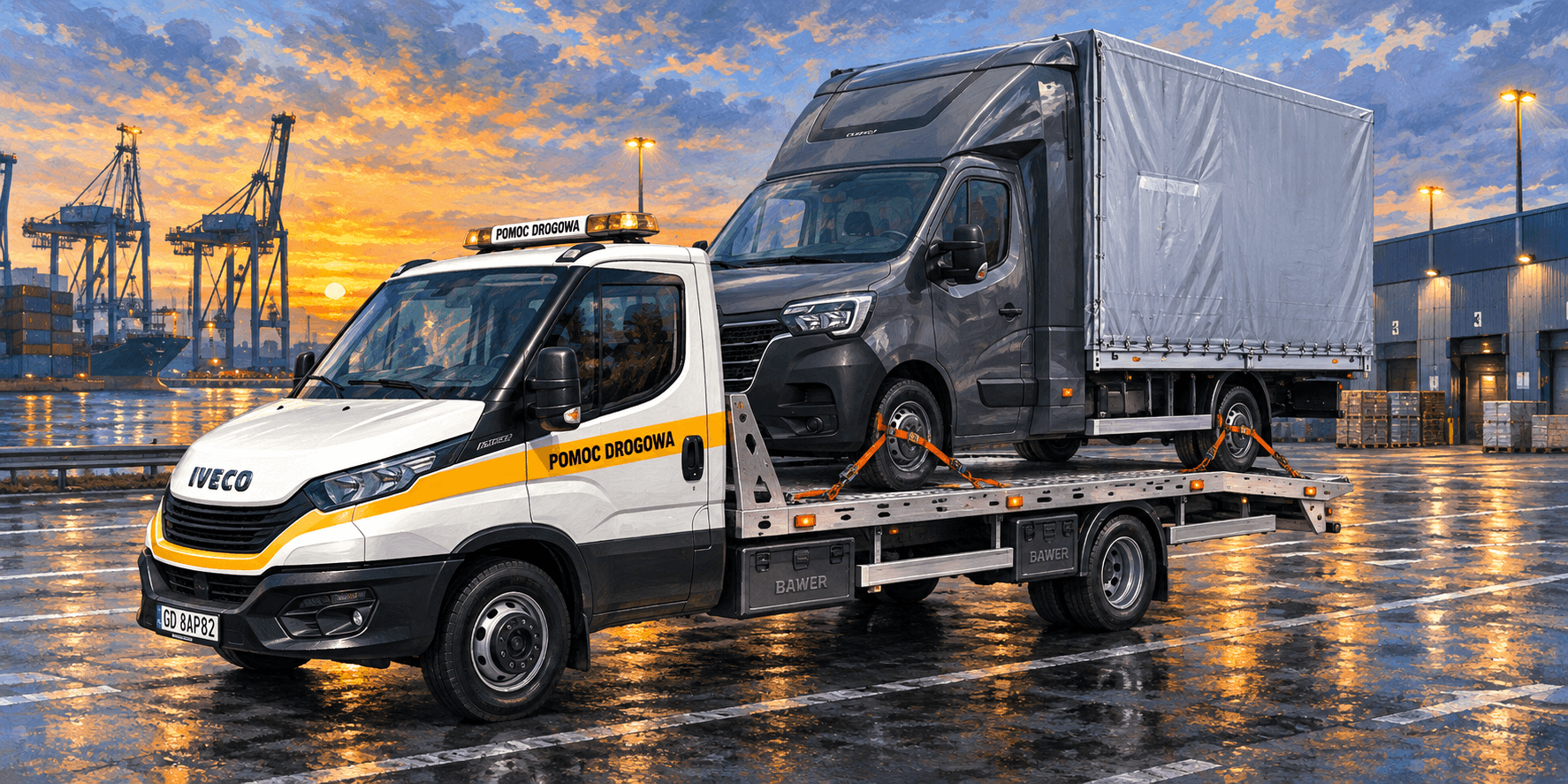
Safe transport of vehicles with curtain-sided bodywork
A curtain-sided vehicle breakdown requires proper preparation
A curtain-sided vehicle differs from a standard commercial van not only in height, but also in its body construction and weight distribution. After a breakdown or collision, it is important to establish whether only the vehicle has been damaged or whether the bodywork and cargo have also been affected.
HELP-CAR transports curtain-sided vehicles after mechanical failures and road collisions. We also provide planned transport to a workshop, after a vehicle purchase, between company branches and on domestic or international routes.
Before departure, we confirm the vehicle specifications and loading conditions so that the safest transport method can be selected.
What information is required?
When contacting us, please provide:
- the make and model of the vehicle;
- the length and height of the body;
- its approximate weight;
- information about the type of cargo;
- the vehicle’s technical condition;
- whether the wheels roll freely.
Please also tell us in advance if the vehicle has additional equipment such as:
- a lifting roof;
- aluminium side panels;
- a tail lift;
- additional storage compartments.
This information should be provided before the recovery truck arrives.
Does the cargo need to be unloaded?
Not always.
We first assess:
- the type of goods being carried;
- how the cargo has been secured;
- the vehicle’s total weight;
- whether safe loading is possible.
If the cargo is correctly secured and does not affect transport safety, it will often not need to be unloaded.
Heavy, loose or unstable materials may require the load compartment to be partially emptied before transport begins.
Every situation is assessed individually.
The height of the bodywork matters
Curtain-sided vehicles are generally higher than standard commercial vans.
Before transport, we therefore check:
- the vehicle’s total height;
- clearance beneath bridges and overpasses;
- access to the vehicle’s location;
- the width of the entrance;
- the space required to position the platform.
Photos of the breakdown location often help us determine in advance whether safe loading will be possible.
Loading a curtain-sided vehicle
Before transport begins, we check:
- the condition of the suspension;
- whether the vehicle can roll;
- whether the steering is operational;
- damage to the bodywork;
- any parts that may interfere with securing the vehicle.
If the curtain or body frame has been damaged in a collision, we pay particular attention to loose structural elements and whether they need additional securing before transport.
Local and long-distance transport
We transport curtain-sided vehicles to:
- workshops;
- transport depots;
- warehouses;
- logistics centres;
- cargo transfer points;
- a customer’s specified address.
For longer journeys, we confirm the unloading arrangements and access conditions at the destination in advance.
Direct contact with the driver
When contacting HELP-CAR, the customer speaks directly to the driver arranging the transport.
During the conversation, we discuss:
- the condition of the vehicle;
- the type of bodywork;
- the cargo being carried;
- the vehicle’s location;
- the route;
- the estimated cost of the service.
This reduces the risk of misunderstandings and shortens the time needed to organise the transport.
Useful information to prepare before calling
Please have the following ready where possible:
- the vehicle’s exact location;
- its make and model;
- the length and height of the body;
- information about the cargo;
- photos of the vehicle;
- photos of its surroundings;
- the destination address.
The more accurate the information, the easier it is to prepare the appropriate transport solution.
Transport safety
A curtain-sided vehicle requires an individual assessment before loading.
The condition of the vehicle is not the only important factor. The height of the bodywork, the distribution of the cargo and the conditions at the parking location must also be considered.
If continued driving could cause further damage or create a risk to other road users, transport on a recovery platform is the safer solution.